
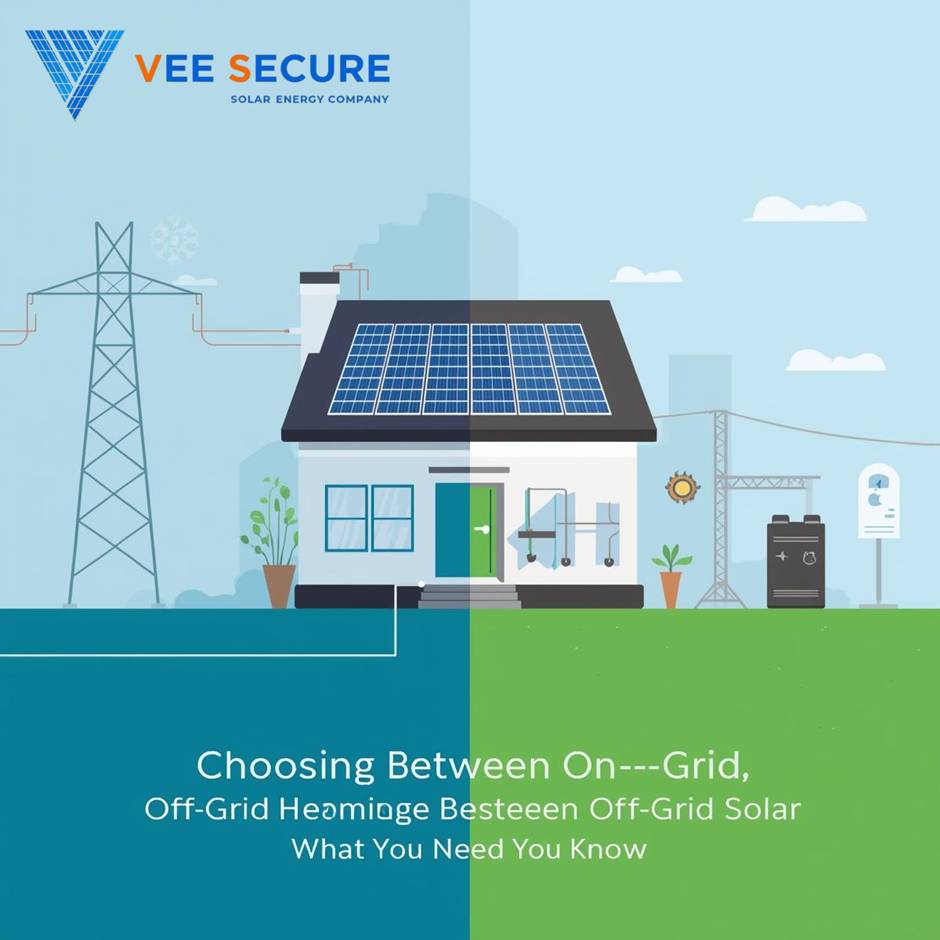
India is racing towards a cleaner energy future, and solar power is leading the charge. From homes to businesses to industries, everyone is looking for ways to cut electricity costs while reducing dependence on conventional sources. Among the many solar options available, the most common question remains: What’s the difference between an On-Grid Solar System and an Off-Grid Solar System?
If you’re trying to figure out which type of solar solution suits you best—on-grid, off-grid, or hybrid—this guide will break it down. We’ll cover features, benefits, costs, pros and cons, and professional advice so you can make the smartest choice.
🔆 What is an On-Grid Solar System?
An On-Grid Solar System (also called a grid-tied system) is directly connected to your local electricity grid. Your panels generate energy during the day, and any extra power is exported back to the grid. At night, or during cloudy hours when production drops, you can simply pull power from the grid.
The highlight of this setup is net metering — which allows you to earn credits for the extra electricity you feed into the grid. Those credits directly reduce your power bill. For urban homes and offices, this is the most cost-effective and straightforward solar option.
How On-Grid Solar Systems Work:
Panels capture sunlight and produce DC electricity.
An inverter converts DC into usable AC power.
Extra energy flows back into the grid.
Power is drawn from the grid when solar production is low.
➡️ Simple, reliable, and affordable — that’s why on-grid remains the top pick for cities.
Key Benefits of On-Grid Systems:
Big savings on power bills through net metering.
No costly batteries needed.
Environmentally friendly.
Ideal for homes and offices in cities with a reliable power supply.
🌙 What is an Off-Grid Solar System?
- 🔆 What is an On-Grid Solar System?
An On-Grid Solar System (also called a grid-tied system) is directly connected to your local electricity grid. Your panels generate energy during the day, and any extra power is exported back to the grid. At night, or during cloudy hours when production drops, you can simply pull power from the grid.
The highlight of this setup is net metering — which allows you to earn credits for the extra electricity you feed into the grid. Those credits directly reduce your power bill. For urban homes and offices, this is the most cost-effective and straightforward solar option.
How Off-Grid Systems Work:
Panels produce DC electricity from sunlight.
A charge controller regulates the flow and prevents battery overcharging.
Extra energy is stored in batteries for later use.
Inverter converts DC into AC for appliances and lights.
➡️ With this setup, you never need the utility grid — making it perfect for villages, farms, and resorts.
Key Benefits of Off-Grid Systems:
100% independence from grid fluctuations.
Reliable power in rural and remote regions.
Full control over electricity generation.
Consistent supply during blackouts.
⚡ On-Grid vs Off-Grid: Side-by-Side
Feature On-Grid Solar System Off-Grid Solar System
Connection Linked to utility grid Works independently
Battery Need Not required Essential for storage
Best For Urban homes & businesses Rural/remote locations
Cost Lower upfront investment Higher due to batteries
Net Metering Yes Not available
Backup Power None during outages Backup available anytime
👉 Both serve unique needs. The choice depends on whether you prioritize maximum savings or total independence.
✅ Pros and Cons at a Glance
On-Grid Solar Systems
Advantages: Cost-effective, low maintenance, net metering benefits.
Drawbacks: No backup during blackouts, dependent on grid.
Off-Grid Solar Systems
Advantages: Energy independence, reliable for remote areas, blackout-proof.
Drawbacks: Higher setup cost, batteries need replacement, requires more space.
🔄 Hybrid Solar: The Best of Both Worlds
If you want the benefits of both setups, a Hybrid Solar System might be your answer. Hybrid systems are connected to the grid but also come with battery backup.
This way, you enjoy savings from net metering and still have backup power during outages. Although costlier than simple on-grid systems, hybrids are becoming popular with homeowners and businesses who want both security and savings.
💰 Cost Comparison
On-Grid Solar: Lowest upfront cost, highly cost-effective in the long run with net metering.
Off-Grid Solar: Expensive due to batteries but essential in remote areas.
Hybrid Solar: Mid-to-high cost but offers flexibility and reliability.
When considering costs, always weigh electricity tariffs, grid reliability, and your household energy usage.
🏡 Choosing the Right System
Your ideal solar setup depends on your location and lifestyle:
City residents with steady grid power → go for On-Grid Solar.
Rural/remote homes with no reliable grid → choose Off-Grid Solar.
Those wanting savings + backup → invest in a Hybrid Solar System.
🌱 How VEE SECURE SOLAR Helps You Decide
At VEE SECURE SOLAR Energy, we specialize in guiding families and businesses to the right solar choice. By evaluating your site, energy use, and budget, we recommend the system that delivers maximum value — whether it’s on-grid, off-grid, or hybrid.
From consultation to installation, our experts ensure smooth execution, top-quality equipment, and long-term reliability. With VEE SECURE SOLAR, you don’t just install solar — you invest in energy independence and a sustainable future.
✨ Conclusion
The question isn’t about which solar system is “better” overall, but which one is better for you.
On-grid systems = affordable savings, perfect for cities.
Off-grid systems = independence and security, ideal for remote areas.
Hybrid systems = the smart middle path for those who want both.
With the right guidance from trusted solar partners like VEE SECURE SOLAR, choosing becomes easy. Solar power isn’t just about reducing bills — it’s about building a greener, smarter, and more reliable energy future.